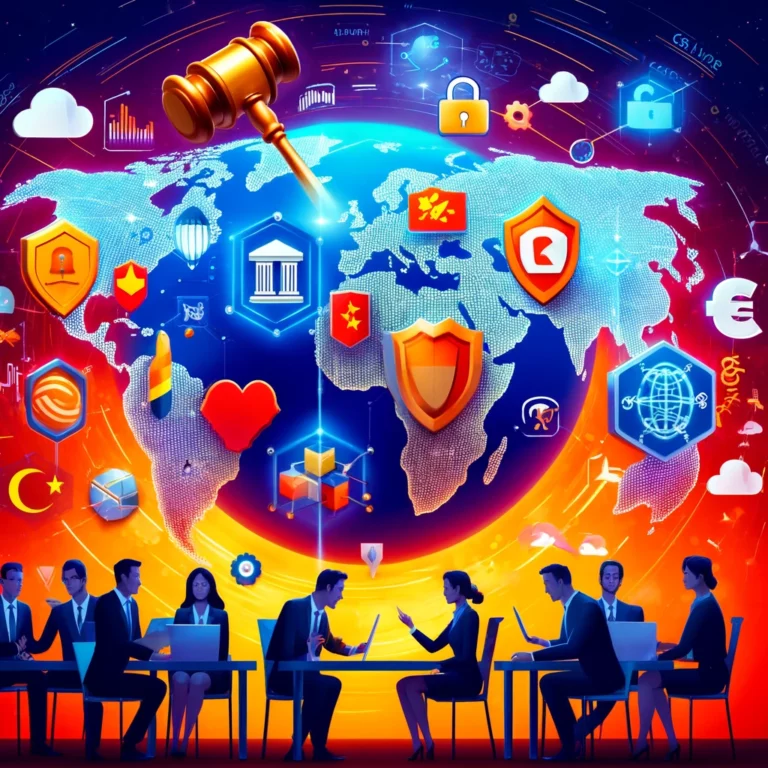

Global Tech Regulation Is Evolving — Here’s How Governments Are Quietly Rewriting the Internet
For decades, the internet operated with relatively light oversight.
Innovation moved faster than legislation. Platforms expanded globally before regulators could fully understand their impact. Tech companies shaped digital ecosystems with minimal structural constraints.
That era is ending.
Governments around the world are quietly rewriting the rules of the internet — not through dramatic shutdowns, but through layered regulation that reshapes how digital platforms operate.
The transformation is gradual. But its impact will be permanent.
The Shift From Innovation-First to Control-First
In the early 2000s, policymakers prioritized innovation.
The internet was viewed as a growth engine — a space for startups, free expression, and economic expansion.
Today, governments see it differently.
Digital platforms now influence:
- Elections
- Financial markets
- Public health narratives
- National security
- Consumer data protection
As digital infrastructure becomes critical infrastructure, regulation becomes inevitable.
Data Privacy Is Redefining Business Models
Data has become the most valuable asset in the digital economy.
But widespread data collection practices have raised public concern.
New privacy frameworks are emerging globally, requiring:
- Explicit user consent
- Data minimization practices
- Transparency in data usage
- User access to stored information
These rules force companies to rethink advertising models, data storage systems, and customer tracking strategies.
The “collect everything” era is fading.
Platform Accountability Is Expanding
Social media platforms once operated as neutral intermediaries.
Now they face pressure to moderate content more aggressively.
Governments are introducing rules that require:
- Faster removal of harmful content
- Greater transparency in algorithms
- Clear reporting on moderation decisions
This creates tension between free expression and content control.
Platforms are no longer just technology providers.
They are treated as digital gatekeepers.
Antitrust and Market Power Scrutiny
Large technology firms have achieved unprecedented scale.
Regulators are increasingly concerned about monopolistic practices.
Investigations now focus on:
- App store control
- Search engine dominance
- Digital advertising concentration
- Acquisitions of emerging competitors
Governments are examining whether certain tech ecosystems limit competition.
Market structure is under review.
Cybersecurity as National Security
Cyberattacks have escalated in frequency and sophistication.
Critical infrastructure — energy grids, financial systems, healthcare networks — is increasingly digitized.
As a result, cybersecurity regulations are tightening.
Companies are being required to:
- Report breaches quickly
- Strengthen infrastructure defenses
- Conduct regular risk assessments
Digital resilience is no longer optional.
It is strategic.
The Fragmentation of the Internet
Perhaps the most significant shift is geopolitical.
Different regions are developing distinct digital standards.
Data localization laws, content regulations, and surveillance policies vary widely.
This could lead to a more fragmented global internet — sometimes referred to as a “splinternet.”
Instead of one unified digital ecosystem, companies may need to comply with multiple regulatory frameworks.
Global expansion becomes more complex.
The Quiet Nature of Change
Unlike major platform launches, regulatory shifts do not trend on social media.
They appear as policy updates, compliance deadlines, and legal rulings.
But their impact is profound.
Business models adjust.
Product features change.
Algorithm design evolves.
Infrastructure adapts.
Regulation doesn’t remove technology — it reshapes it.
What This Means for Users
For everyday users, changes may appear subtle:
- More privacy notices
- Fewer targeted ads
- Greater transparency reports
- Stricter content moderation
But behind the scenes, the digital architecture supporting these experiences is being redesigned.
The internet’s early era was defined by rapid expansion.
The next era will be defined by governance.
Governments are not shutting down innovation — they are embedding oversight into digital systems.
The rules shaping tomorrow’s internet are being written now.
And while the changes may feel gradual, they represent one of the most significant structural shifts in the digital age.
The open web isn’t disappearing.
It’s evolving — under new authority.